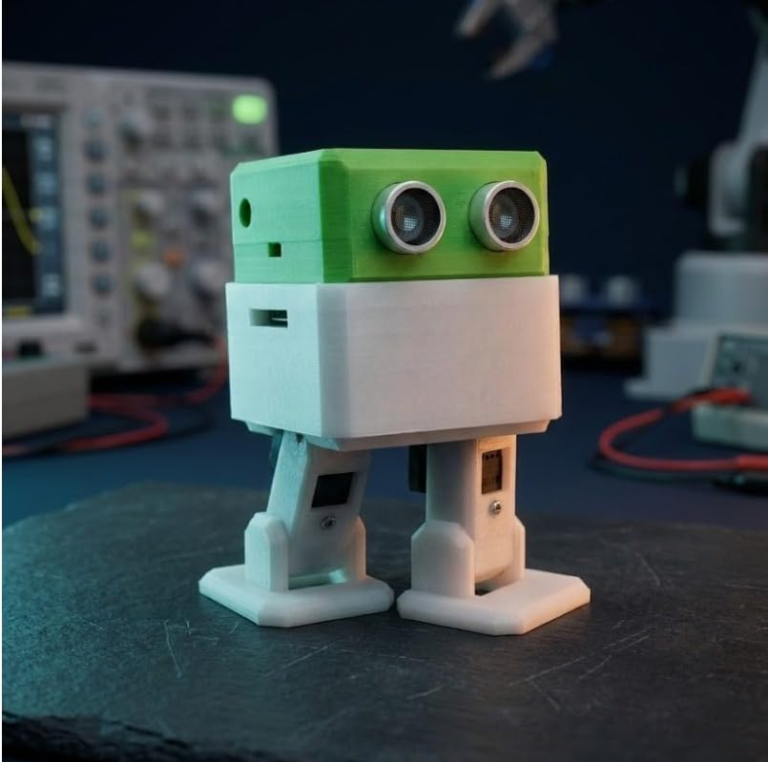

We absorb everything by hearing, but sometimes I observe that our students before hearing try to first clean their ears in the classroom by using their pen refills or hairpins. It’s as if,“Pichle lecture ki contents ko pehle Baahar nikaalthe phhir sochthe ki kya karen!”(First remove the contents of the previous lecture, then think what to do!)
This act of publicly cleaning their ears with such sharp objects is not only a breach of classroom discipline. it is a serious safety risk that could permanently damage their hearing.
So let’s talk about what earwax actually is. Your ear canal produces cerumen, a clever mix of fatty acids, dead skin cells, and antimicrobial proteins. It is not dirt. It is your ear’s self-defence system, trapping dust, bacteria, and even tiny insects before they reach your eardrum. The canal also cleans itself. The skin migrates outward like a slow conveyor belt, carrying old wax with it. The problem only starts when we interfere — with pens, hairpins, or yes, cotton swabs — and push everything deeper.
How Common Is Ear Wax Buildup?
Ear wax buildup — technically called cerumen impaction when it becomes clinically significant — is one of the most common conditions seen in general practice. It is not a niche or unusual problem. It affects a significant portion of the global population at any given time. Studies across different countries estimate that approximately 6% of the general population has clinically relevant cerumen impaction at any point in time. The numbers are substantially higher in certain groups.
| Population Group | Estimated Prevalence of Impaction |
| General adult population | ~6% at any given time |
| Children | ~10% |
| Adults over 65 | ~30% |
| People with intellectual disabilities | Up to 36% |
| Regular cotton bud users | Significantly higher than non-users |
| Hearing aid wearers (daily) | Near universal with aids in both ears |
Affiliate Disclosure: This post contains Amazon affiliate links. If you purchase through our links we earn a small commission at no extra cost to you. We only recommend products we genuinely believe in.
What Happens If You Remove Ear Wax With a Pen Refill, Hairpin, or Sharp Object?
Every ENT specialist has seen the consequences. The patients who come in after using a pen refill, a hairpin, a toothpick, a key, a pencil, a knitting needle, or any other improvised instrument to dig out ear wax are among the most common — and sometimes most serious — cases they deal with. The outer ear canal is approximately 2.5 to 3.5 centimetres long from the opening to the eardrum. The eardrum, the tympanic membrane is a thin, translucent, drum-like membrane that stretches across the canal at its inner end. It is approximately 9 millimetres in diameter and only 0.1 millimetres thick. It is extraordinarily delicate.
The inner two-thirds of the ear canal has no fatty tissue between the thin skin and the underlying bone. Any pressure, scratch, or impact on this skin registers directly on the periosteum — the sensitive membrane covering the bone. This is why inserting anything beyond the very outer part of the canal is acutely painful.
What Sharp Objects Do?
The most consistent finding is that sharp objects do not remove wax — they compact it. The ear canal narrows toward the eardrum. A soft, removable plug becomes a hard, deeply impacted plug. They Lacerate the Canal Skin. The laceration may be small and can create an open wound in a warm, moist environment, that is ideal conditions for bacterial and fungal infection. This in turn can perforate the Eardrum. Such Small perforations often heal on their own over 6 to 8 weeks. Larger perforations may require surgical repair — a procedure called tympanoplasty. Additionally, they can also dislocate the Ossicular Chain (the three tiny bones of the middle ear – malleus, incus, and stapes) which causes significant conductive hearing loss and requires microsurgical repair.
What is the safest method to remove this Earwax?
- Cotton Buds: It is simultaneously one of the most-purchased personal care items in the world and one of the most consistently condemned by ENT specialists. Understanding both sides of this argument matters.

Cotton buds were invented in the 1920s by Leo Gerstenzang, who observed his wife cleaning their baby’s ears with cotton wool wrapped around a toothpick. He commercialised a safer, mass-produced version. They were originally marketed for general baby care, cosmetic use, and first aid , not specifically for ear cleaning. The product packaging of virtually all cotton bud brands today explicitly states “do not insert into the ear canal.”
What Cotton buds are Genuinely good for:
- Cleaning the outer ear — the visible folds and contours of the pinna (the external ear) — with a cotton bud is perfectly safe and reasonable. Wax that has migrated out of the canal to the outer ear can be gently wiped away.
- In post-operative ear care, some surgeons instruct patients to clean specific areas around surgical sites using cotton buds — under precise medical guidance.
- For cosmetic use — makeup application and removal, nail polish correction, etc. — cotton buds are excellent tools.
2. Ear Wax Cleaner:
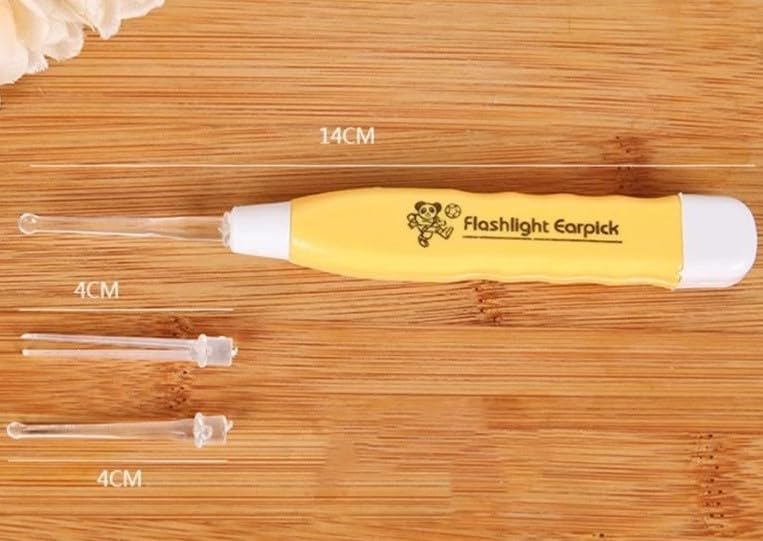
The Metal Ear Wax Removal Kit is a professional-grade alternative to cotton buds, focusing on extracting wax rather than pushing it deeper. While cotton swabs were originally made for general baby care and cosmetics, these tools are specifically engineered for ear hygiene.
Understanding how to use these different shapes is the key to safe cleaning.
What this Metal Kit is Genuinely Good For:
- Actually Removing Wax: Unlike a cotton bud that acts like a piston pushing wax inward, the scoops and loops in this kit are designed to go around the wax and pull it out.
- Handling Different Wax Types: The spiral tip is great for oily wax, while the spring tip is perfect for cleaning dry flakes and relieving deep-seated itches without scratching.
- Better Visibility: The LED ear pick solves the “blind cleaning” problem. It lights up the ear canal so you can see exactly what you are doing, which is much safer when helping others.
- Hygiene and Value: Made of medical-grade stainless steel, these tools are not disposable. You can wash and sterilize them easily, making them a cleaner, one-time investment for your grooming kit.
3. Earocam Ear Cleaner Earwax Removal Tool:
This Visual Ear Camera Kit is the high-tech answer to ear hygiene. It replaces guesswork with a high-definition camera, allowing you to see exactly what you are doing on your phone screen.
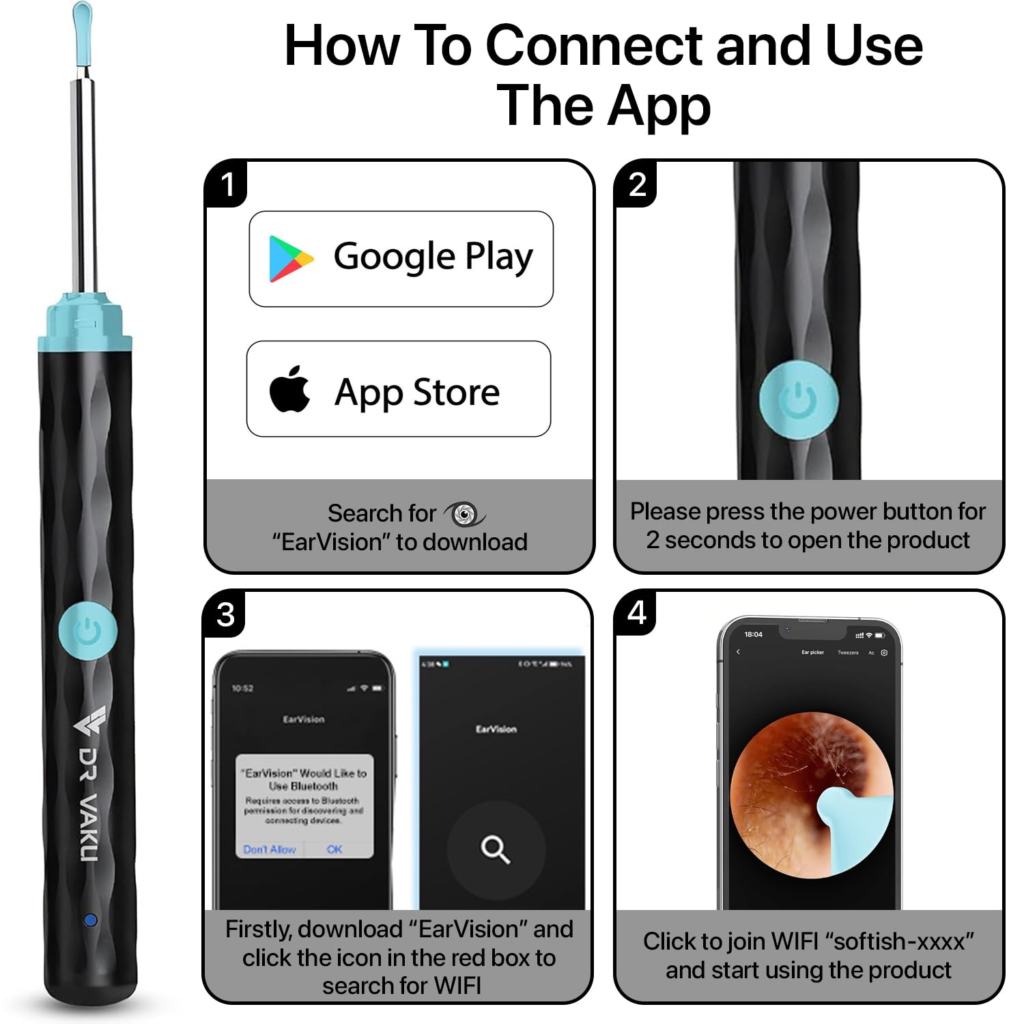
While cotton buds can accidentally push wax deeper, this tool is designed for precise, safe removal under your own supervision.
What this Visual Tool is Genuinely Good For:
- Seeing Before You Scoop: The HD camera and LED lights end the danger of “blind” cleaning. You can see the ear canal clearly on your phone, making it much safer to avoid sensitive areas like the eardrum.
- Accurate Wax Removal: Instead of pushing wax in, you can use the 360° spiral picks to target and pull out buildup exactly where you see it.
- Checking Other Areas: It is a versatile “home health” tool. You can use the camera to safely inspect noses, throats, or skin for your family or pets.
- Safe for the Family: With 11 soft silicone tips and stainless steel tools, the kit is easy to wash and sterilize, making it hygienic for multiple people to share.
- Simple Connectivity: It creates its own Wi-Fi signal to talk to your phone, so it works anywhere without needing a complex setup.
Click here to see the demo of this tool
My Verdict
Your ears have been doing their job quietly for years. The least we can do is stop stabbing them with stationery. Do your students (or your children) have this habit too? What do you tell them?
#EarHealth #ClassroomObservations #PhysicsTeacher #EdTech #GadgetReview #ParentingTips #HealthAwareness #IBPhysics
Highly Recommended. ⭐⭐⭐⭐⭐
👉 Check the latest price and availability on Amazon India using the button below. Stock is limited, so grab it before it runs out!
Use our free ShopGenie — an AI-powered Amazon search tool built specifically for Indian shoppers.
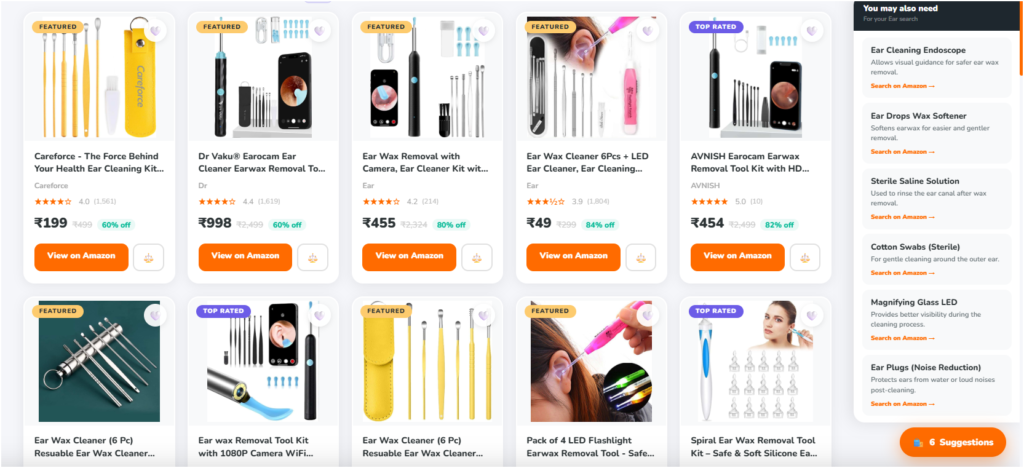
Instead of using pen refills or hairpins to ‘make room’ for the next lecture, why not use something actually designed for the job? Search for ‘Electric Ear Wax Removal Kit’ or ‘Visual Ear Cleaner’ in ShopGenie to find much safer, high-tech tools.
No account needed. Completely free. Just smarter Amazon shopping.